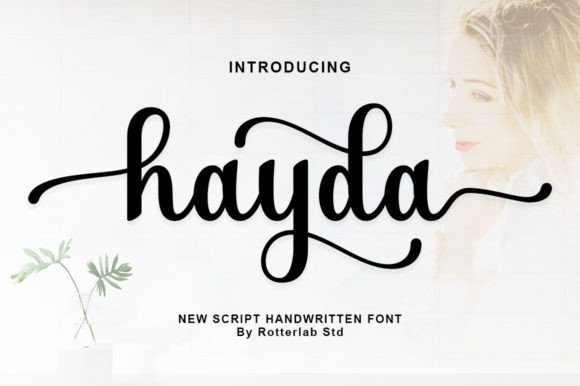
Hayda Script: The Modern Calligraphy Font for Authentic Design
There’s a certain magic that happens when a design feels genuinely personal. It’s the difference between a corporate logo that feels sterile and one that feels like it was crafted with care. This is the space where Hayda Script lives. It’s not just a script font; it’s a tool for injecting warmth, personality, and a human touch into your projects. As a designer who has seen countless typefaces come and go, I find Hayda Script stands out for its ability to be both stylishly modern and comfortably approachable.
What Exactly is Hayda Script?
At its core, Hayda Script is a premium font categorized as a modern calligraphy typeface. Imagine the fluid, connected strokes of someone writing with a confident hand, but refined and digitized for clarity and consistency. Its visual personality is cute without being childish, elegant without being stuffy, and modern without being cold. The letterforms have a gentle bounce and a natural flow, with ligatures and alternate characters that mimic the organic variations of real handwriting. This isn't a rigid, formal script; it's a handwritten font that feels alive and expressive.
The overall appeal lies in its versatility. It strikes a delicate balance, making it suitable for a wide range of applications where you want to convey authenticity and charm. Whether you're designing a wedding invitation or a social media post for a boutique bakery, Hayda Script helps communicate a message that feels personal and intentional.
Where Hayda Script Truly Shines: Real-World Applications
Understanding a font's strengths is key to using it effectively. Hayda Script excels in contexts where connection and personality are paramount. Here’s a practical breakdown of where it works best.
Branding and Logo Design
For small businesses, especially those in lifestyle, beauty, food, or artisanal markets, a logo design using Hayda Script can instantly establish a friendly and trustworthy brand identity. It works beautifully for a café, a handmade jewelry line, or a wellness coach. The font suggests craftsmanship and care. However, a crucial tip: always pair it with a clean, simple sans serif font or a sturdy serif font for body text and subheadings. This creates a clear visual hierarchy, ensuring your brand name is memorable while supporting information remains highly readable.
Packaging and Product Design
This is where Hayda Script can truly elevate a product. On packaging design, it can be used for the product name or key descriptors to catch the eye and convey a sense of homemade quality or luxury. Think of a jam jar label, a candle box, or a cosmetic tube. The script adds a tactile, artisanal feel that stands out on a shelf crowded with generic, blocky fonts. Its legibility at medium sizes makes it a practical choice for this application.
Editorial and Publishing
In editorial design, such as magazines, lookbooks, or blog graphics, Hayda Script serves as a powerful display font. Use it for pull quotes, chapter titles, or featured article headers to break the monotony of long-form text. It adds a dynamic, engaging element that draws readers into the content. For digital publishing, it can make email newsletter headers or PDF lead magnets feel more premium and curated.
Digital and Social Media
The digital realm is a natural fit. For social media graphics, Hayda Script can make quotes, announcements, or sale promotions feel more personal and less like an ad. It’s perfect for Instagram stories, Pinterest pins, and Facebook banners where you need to stop the scroll with something that feels human. In web design, it can be used sparingly for hero section headlines or call-to-action buttons to add personality, but it should be used with caution for main body copy due to screen readability constraints.
Personal Projects and Events
Of course, the font’s charm is ideal for personal celebrations. Wedding invitations, event signage, thank-you cards, and personalized gifts are classic use cases. Its PUA encoding is a major advantage here, as it allows easy access to all the beautiful swashes and ligatures from any standard software, letting you craft truly unique and decorative text without needing advanced design skills.
Practical Guidance for Using Hayda Script
Choosing the right font is only half the battle. Using it well is what makes a design professional.
- Evaluate Project Fit: Before you commit, ask: Does my project need a human, approachable, or celebratory tone? If the answer is yes, Hayda Script is a strong candidate. If you need absolute formality or ultra-minimalist tech vibes, a geometric sans serif might be better.
- Master Font Pairing: This is non-negotiable. Never set paragraphs of text in Hayda Script. Its strength is as a headline or accent font. Pair it with a neutral, legible font pairing partner. A simple sans serif like Montserrat or a classic serif like Garamond creates a balanced and professional look.
- Explore the Glyphs: Don’t just type and go. Open the glyphs panel in your design software. Hayda Script likely includes stylistic alternates and ligatures that can transform a simple word into a stunning piece of typographic art. This is where the PUA encoding pays off.
- Test for Readability: Always test your design at the intended viewing size and distance. A script font that looks gorgeous on your 27-inch monitor might become an unreadable blob on a mobile phone or a small product label. Adjust letter spacing and size accordingly.
- Understand the License: As a commercial font, ensure you have the correct license for your use case—whether it's for a single client project, unlimited commercial use, or embedding in a mobile app. Respecting licensing is part of being a professional.
In the end, a creative font like Hayda Script is more than just a collection of letters; it's a design asset that can influence mood, perception, and connection. Used thoughtfully, it becomes a key component in building a cohesive and engaging visual language that resonates with your audience. It’s about choosing a typeface that doesn’t just look good, but feels right for the story you’re trying to tell.


